
Trailblazing trial design: LYFGENIA™ is the result of the longest-studied gene therapy program in SCD
LYFGENIA was evaluated in 2 clinical trials1
LYFGENIA was evaluated in 2 clinical trials1
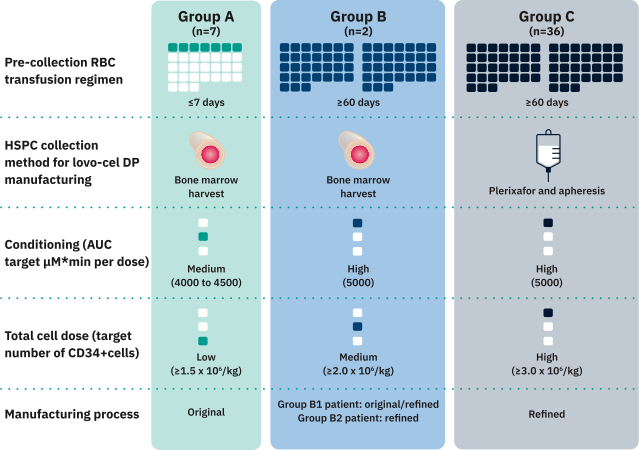
The safety of LYFGENIA was based on patients with sickle cell disease in 1 open-label, single-arm clinical trial (Study 1: HGB-206) and 1 long-term follow-up study (LTF-307).1,3 Study 1 started in February 2015.
The efficacy of LYFGENIA was studied in a single-arm, 24-month, open-label, multicenter Phase 1/2 study (Study 1-C).1
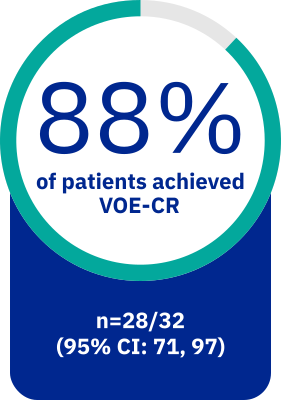
In Study 1-C, 32 patients with a history of at least 4 VOEs in the 24 months prior to informed consent were evaluated for VOEs.1
[[Vaso-occlusive events (VOEs)1]]
Primary Endpoint1
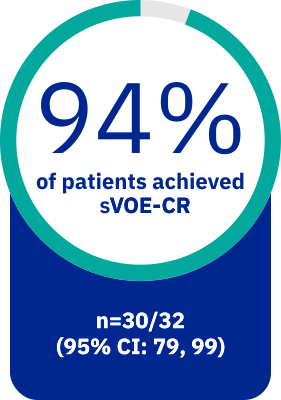
[[Severe vaso-occlusive events (sVOEs)1]]
Secondary Endpoint1
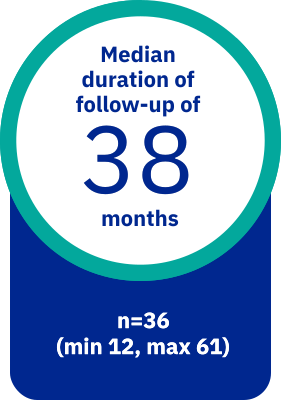
Follow-up Time1
LYFGENIA is the only approved SCD gene therapy supported by a study design that used a fixed efficacy assessment window that was predefined, ensuring patients were evaluated for (s)VOEs between 6-18 months after infusion.1,4
LYFGENIA delivered powerful and lasting reduction in VOEs
Vaso-occlusive events before and after LYFGENIA infusion5
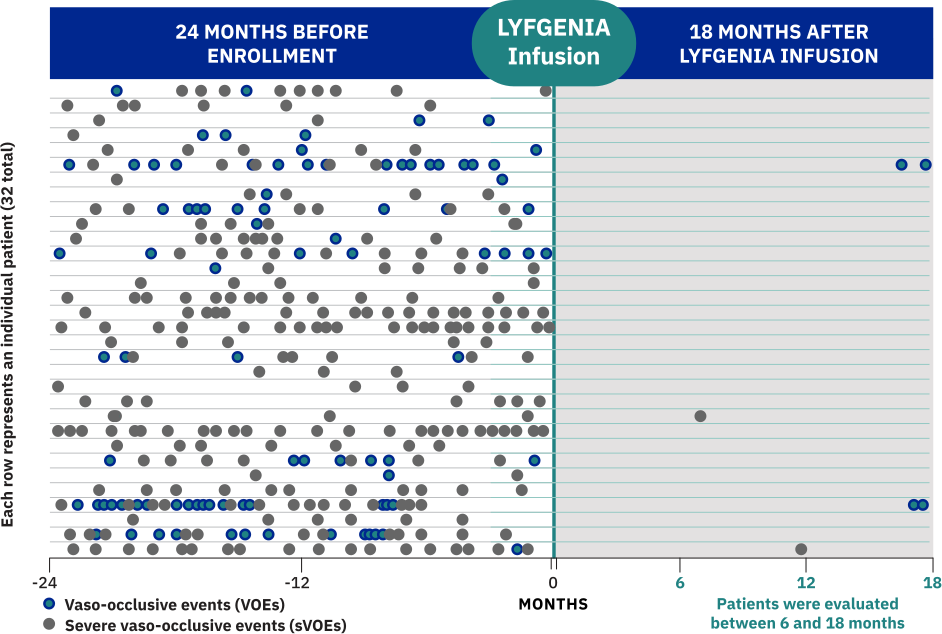
sVOEs were also counted as VOEs.
This figure represents patient-level data and is not included in the USPI.
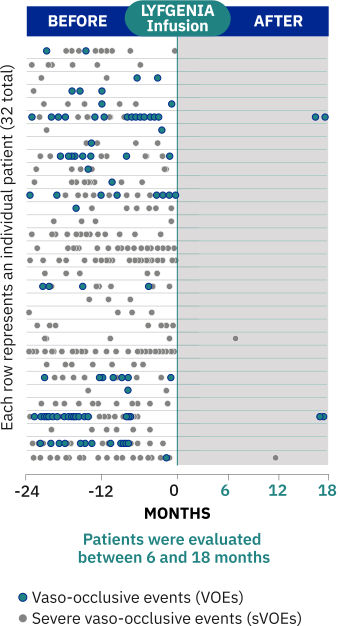
Vaso-occlusive events before and after LYFGENIA infusion5
sVOEs were also counted as VOEs.
This figure represents patient-level data and is not included in the USPI.
Vaso-Occlusive Events (VOEs)1
In the LYFGENIA study, vaso-occlusive events (VOEs) were defined as any of the following events requiring evaluation at a medical facility:
- an episode of acute pain with no medically determined cause other than vaso-occlusion, lasting more than 2 hours
- acute chest syndrome
- acute hepatic sequestration
- acute splenic sequestration
Severe Vaso-Occlusive Events (sVOEs)1
In the LYFGENIA study, severe vaso-occlusive events (sVOEs) were defined as vaso-occlusive events (VOEs) requiring either of the following:
- a hospitalization
- multiple visits to an emergency department/urgent care over 72 hours and receiving IV medications at each visit
- priapism requiring any level of medical attention

STUDY 1-C
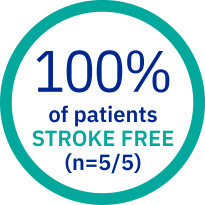
Demonstrated resilience in stroke patients — 5 patients remained stroke-free after LYFGENIA
Demonstrated resilience in stroke patients — 5 patients remained stroke-free after LYFGENIA
Five patients (≥18 years of age) in Study 1-C with a history of stroke or vasculopathy who were on chronic transfusion therapy prior to LYFGENIA infusion remained transfusion-independent and without recurrent stroke at 44–60 months follow-up.1
The only approved SCD gene therapy with stroke outcome data included in the Prescribing Information1,4

Achieved Globin Response1
(n=31/36)
All members of the transplant population (n=36) were evaluated for globin response
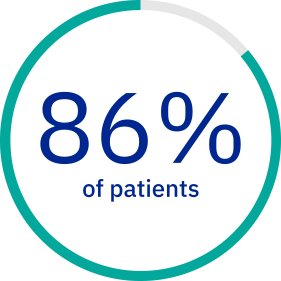
Achieved Globin Response1
(n=31/36)
All members of the transplant population (n=36) were evaluated for globin response
Patients Who Achieved Globin Response
Maintained It1
(n=31/31)
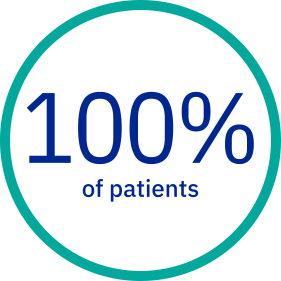
Patients Who Achieved Globin Response
Maintained It1
(n=31/31)
Globin response, a secondary endpoint of the LYFGENIA clinical trials, was defined as meeting the following criteria for a continuous period of at least 6 months after LYFGENIA infusion:
- Weighted average hemoglobin AT87Q percentage of non-transfused total Hb ≥30% AND1
- Weighted average non-transfused total Hb (HbS + HbF + HbA2 + HbAT87Q) increase of ≥3 g/dL compared to baseline total Hb OR weighted average non-transfused total Hb ≥10 g/dL1
Median concentration of total Hb after LYFGENIA infusion6
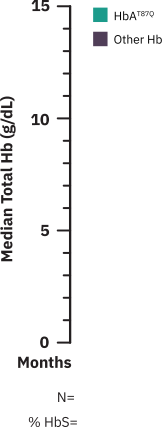
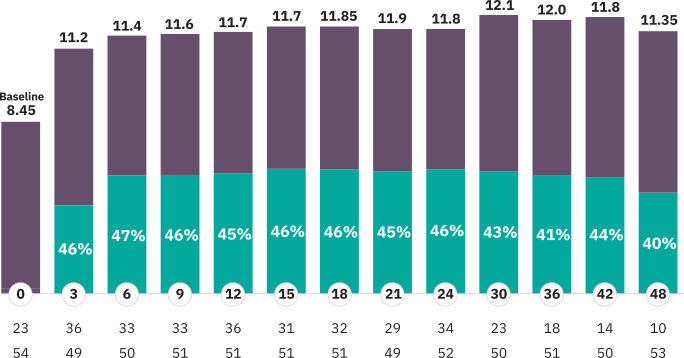
Total Hb consists of HbS, HbAT87Q, fetal hemoglobin (HbF), and HbA2
Other Hb includes HbS, HbF, and HbA2
This data is from a secondary efficacy endpoint; however, there was no formal hypothesis testing.
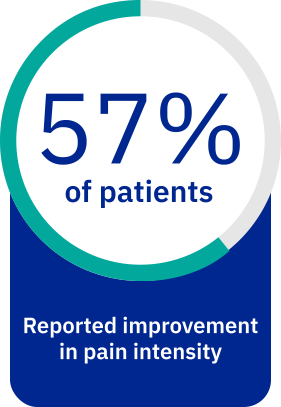
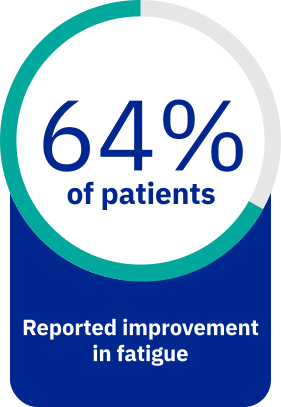
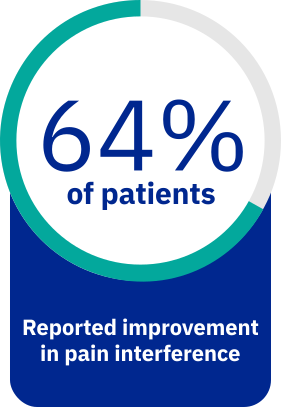
This exploratory analysis includes a subset of adult Study 1-C patients with available baseline and follow-up health-related quality of life (HRQOL) data (PROMIS-57).7
No efficacy conclusions should be drawn from these data.