
A well-established safety profile with one-time LYFGENIA™ therapy
The safety of LYFGENIA was evaluated in 45 patients with a median (min, max) duration of follow-up of 42 (12, 87) months.1
LYFGENIA Safety and Efficacy
Experts break down the safety findings and additional considerations of treatment with LYFGENIA
Jump to topics on page:
Adverse Reactions Additional Safety Data Additional Safety ConsiderationsJump to topics on page:
Adverse ReactionsAdditional Safety Data
Additional Safety Considerations
LYFGENIA is the longest-studied* approved gene therapy for SCD2
LYFGENIA was evaluated in 2 clinical trials2
HGB-206
Study 1
STUDY DESIGN
Single-arm, 24-month, open-label, multicenter Phase 1/2 study1
START DATE
February 20152
PRIMARY ENDPOINT
Complete resolution of VOEs (VOE-CR) between 6 months and 18 months after infusion of LYFGENIA1
SECONDARY ENDPOINTS
Complete resolution of severe VOEs (sVOE-CR) between 6 and 18 months after infusion of LYFGENIA and globin response1
STUDY DEMOGRAPHICS
– 54 patients initiated stem cell collection1
– Median age was 25 (min 12, max 43) years old1
– 5 patients with a history of stroke or vasculopathy were treated1
FOLLOW-UP TIME
Duration of follow-up for individuals infused with LYFGENIA (n=45): median (min, max) of 42 months (12, 87)1
DOSAGE
The median (min, max) dose of LYFGENIA was 6.4 (3, 14) × 106 CD34+ cells/kg (n=36)1
LTF-307
- A long-term safety and efficacy follow-up study (up to 15 years)3
- Primary endpoints: long-term safety and efficacy3
*The key registrational clinical trial that evaluated LYFGENIA started in February 2015.2
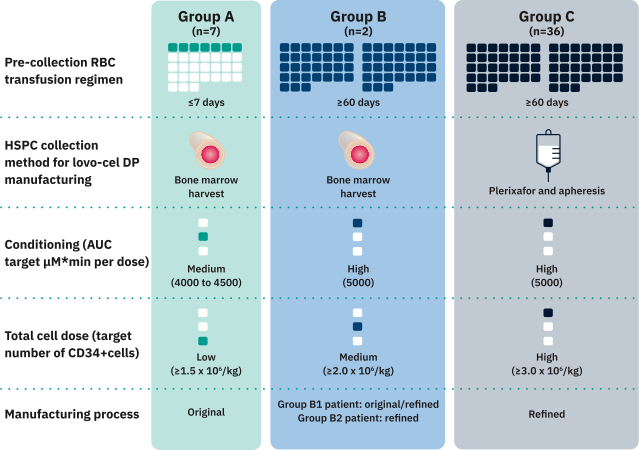
Protocol for Study 1 evolved as a result of continuous process improvements
Intentional enhancements were made to cell collection, conditioning, and manufacturing to improve the process at every level.3
- Safety is based on all of Study 1 (HGB-206) and the long-term follow-up study (LTF-307)1,3
- Efficacy is based only on Study 1-C and LTF-3071,3
- LYFGENIA utilizes the same cell collection and manufacturing process as Study 1-C1,3
*The key registrational clinical trial that evaluated LYFGENIA started in February 2015.2
Adverse Reactions ≥Grade 3 (>5%) Following Treatment With LYFGENIA from Day 1 to Month 24 (N=45)1*
| Adverse Reaction | Grade 3 or higher n (%) |
|---|---|
| Blood and lymphatic system disorders | |
| Thrombocytopenia | 31 (69) |
| Neutropenia | 27 (60) |
| Febrile neutropenia | 20 (44) |
| Anemiaa | 15 (33) |
| Leukopenia | 15 (33) |
| Sickle cell anemia with crisisb | 7 (16) |
| Gastrointestinal disorders | |
| Stomatitis | 32 (71) |
| Nausea | 4 (9) |
| General disorders and administration site conditions | |
| Pyrexia | 3 (7) |
| Infections and infestations | |
| Bacteremia | 3 (7) |
| Investigations | |
| Aspartate aminotransferase increased | 8 (18) |
| Alanine aminotransferase increased | 6 (13) |
| Gamma-glutamyl transferase increased | 6 (13) |
| Blood bilirubin increased | 3 (7) |
| Metabolism and nutrition disorders | |
| Decreased appetite | 5 (11) |
| Respiratory, thoracic, and mediastinal disorders | |
| Pharyngeal inflammation | 5 (11) |
aIncludes a patient with α-thalassemia trait who was diagnosed with myelodysplastic syndrome after Month 24.1
bIncludes events prior to Month 6 and non-adjudicated occurrences.1
*Includes adverse events associated with busulfan myeloablative conditioning and underlying sickle cell disease.1
Additional Safety Data
- Three patients died during LYFGENIA clinical trials1:
- 1 from sudden cardiac death due to underlying disease and1
- 2 from acute myeloid leukemia who were treated with an earlier version of LYFGENIA using a different manufacturing process and transplant procedure (Study 1, Group A)1
- 33 (73%, 33/45) patients who received LYFGENIA experienced at least 1 serious adverse event (SAE). Most SAEs were related to conditioning or underlying disease1
- Mobilization and apheresis triggered SAEs of sickle cell crisis in 6 (14%, 6/44) patients who initiated mobilization in the intent-to-treat population1
- All patients who initiated conditioning (100%, 45/45) experienced at least 1 adverse event attributed to conditioning. The majority of conditioning-attributed events were non-serious and were consistent with the known effects of alkylating agents1
- Pre-medication for infusion reactions was managed at physician discretion. Infusion-related reactions to LYFGENIA were observed in 2 patients on the day of LYFGENIA infusion. Both infusion-related reactions resolved and were Grade 1. Events included hot flush and decreased diastolic blood pressure1
Additional Safety Considerations
Hematologic malignancy has occurred in patients treated with LYFGENIA (Study 1, Group A).
- At the time of initial product approval, two patients treated with an earlier version of LYFGENIA using a different manufacturing process and transplant procedure (Study 1, Group A) developed acute myeloid leukemia (AML)
- One patient with α-thalassemia trait (Study 1, Group C) has been diagnosed with myelodysplastic syndrome (MDS)
- The additional hematopoietic stress associated with mobilization, conditioning, and infusion of LYFGENIA, including the need to regenerate the hematopoietic system, may increase the risk of a hematologic malignancy
- Patients with sickle cell disease have an increased risk of hematologic malignancy as compared to the general population
- Patients treated with LYFGENIA may develop hematologic malignancies and should have lifelong monitoring
- Monitor for hematologic malignancies with a complete blood count (with differential) at least every 6 months for at least 15 years after treatment with LYFGENIA, and integration site analysis at Months 6, 12, and as warranted
- There is a potential risk of lentiviral vector-mediated insertional oncogenesis after treatment with LYFGENIA
- There are no data on the effects of LYFGENIA on fertility. Data are available on the risk of infertility with myeloablative conditioning. Advise patients of the risks and options for fertility preservation
- Two patients developed anemia following LYFGENIA treatment; one patient continues to require monthly packed red blood cell (pRBC) transfusions. The other patient has been diagnosed with MDS. Both subjects had α-thalassemia trait (-α3.7/-α3.7)
All patients achieved neutrophil engraftment, with the reported median (min, max) day being Day 20 (12, 35) after LYFGENIA infusion
- There is a potential risk of neutrophil engraftment failure. Monitor neutrophil counts until engraftment has been achieved. If neutrophil engraftment failure occurs, provide rescue treatment with the back-up collection of CD34+ cells
Neutrophil engraftment was defined in clinical trials as having 3 consecutive ANC laboratory values ≥0.5 × 10⁹ cells/L obtained on 3 different days by Day 43
- Platelet engraftment was achieved in all patients with a reported median (min, max) day of Day 37 (19, 235) after LYFGENIA infusion
- Two patients treated with LYFGENIA achieved platelet engraftment after Day 100; one of these patients was administered eltrombopag until Day 234
- Delayed platelet engraftment has been observed with LYFGENIA. Bleeding risk is increased prior to platelet engraftment and may continue after engraftment in patients with prolonged thrombocytopenia
- Monitor patients for thrombocytopenia and bleeding
Platelet engraftment was defined in clinical trials as having 3 consecutive platelet values ≥50 × 109/L obtained on different days after the initial post-transplant nadir without receiving any platelet transfusions for 7 days immediately preceding and during the evaluation period
As LYFGENIA is an autologous therapy, prophylactic long-term immunosuppressive agents were not required in clinical studies. There were no cases of graft failure or graft rejection